
TLDR: New research suggests that Seahenge was an ancient form of geoengineering, built in 2049 BC as a ritualistic attempt to prolong summer during a period of severe climatic deterioration. By aligning the timber circle with the solstice to "trap" the warmth of the sun, Bronze Age communities used social cohesion and myth to confront environmental existential threats. This prehistoric intervention serves as a timeless mirror to modern climate anxieties and our persistent drive to hack the systems of nature.
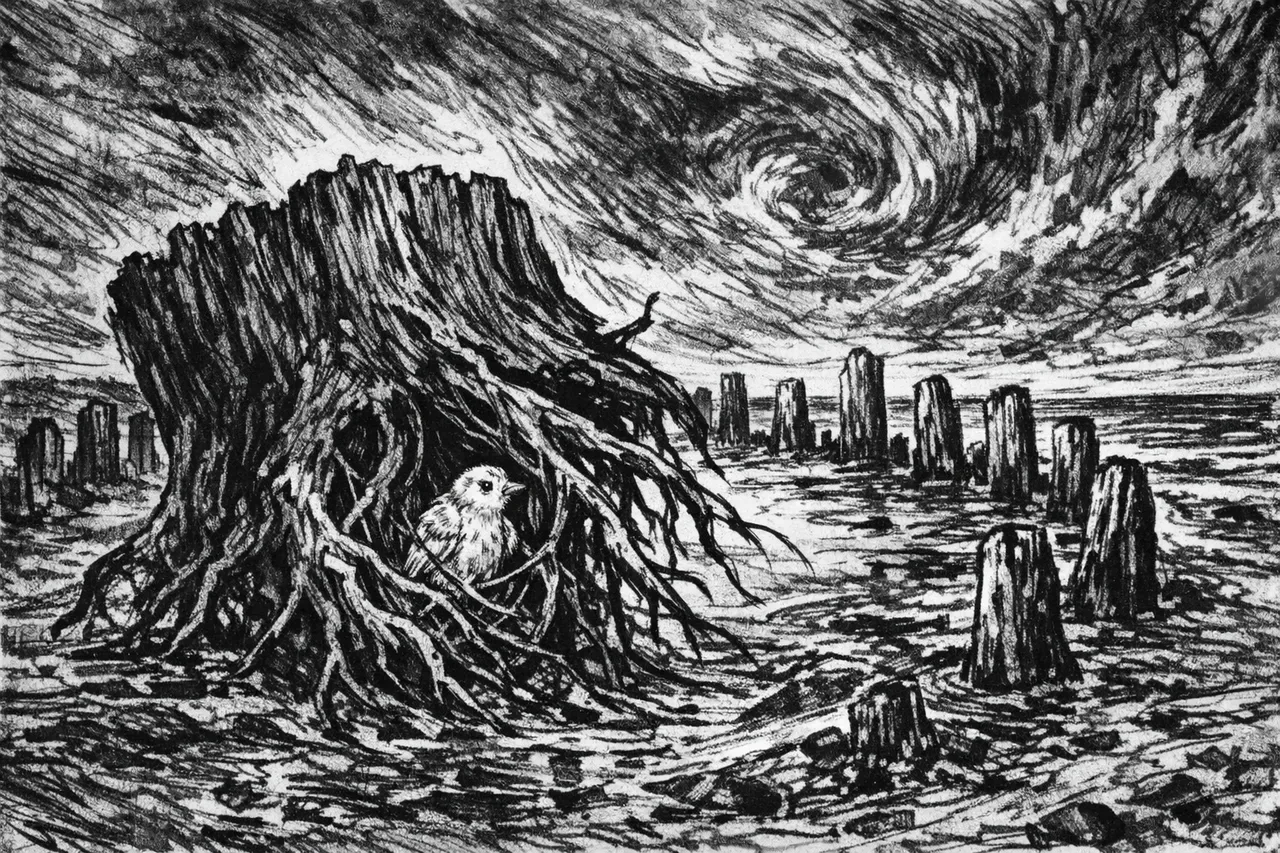
Imagine walking along a windswept stretch of the Norfolk coast at low tide, expecting nothing more than a few interesting shells, and instead finding a 4,000-year-old mystery staring back at you. In 1998, local walker John Lorimer spotted exactly that at Holme-next-the-Sea: a Bronze Age timber circle emerging from the shifting sands. At its center sat a massive oak stump, its gnarled roots pointed toward the sky.
Wait, what? Why bury a tree upside down?
For decades, archaeologists debated whether this structure, dubbed Seahenge, was a ceremonial altar, a grave, or a platform for sky burials where the dead were left for birds to carry away. But a theory published in June 2024 by Dr. David Nance of the University of Aberdeen suggests something more relatable to our modern anxieties. Seahenge might have been an ancient climate ritual, a desperate attempt to trick the sun into staying just a little bit longer.
The Original Move-Fast-and-Build Moment
Before diving into folklore, consider the hard data. Seahenge (formally Holme I) was built with remarkable precision. Fifty-five split oak posts formed an oval about 6.6 meters (roughly 22 feet) across, with five larger posts arranged in a horseshoe around the central stump. At the time of construction, this wasn't a beach but a quiet saltmarsh protected by dunes.
Through dendrochronology (tree-ring dating), we know exactly when axes hit the wood: spring 2049 BC. This wasn't a project that dragged on for generations. Timbers from 15 to 20 trees, shaped with approximately 50 bronze axes, were felled and erected in a single season.
But why the rush?
Environmental data from that period points to brutal climatic deterioration. Communities around 2049 BC likely faced a succession of years without proper summers, marked by late springs and winters that refused to end. When your survival depends on seasonal cycles, a broken spring isn't an inconvenience. It's an existential threat.
How to Trap a Summer Bird
Dr. Nance's research, published in GeoJournal, connects Seahenge's structure to deeply rooted regional folklore: the myth of the "pent cuckoo."
In ancient tradition, the cuckoo heralded fertility and warmth. Folklore held that when the cuckoo stopped singing at the summer solstice, it departed for the Otherworld, taking summer with it. The myth describes a ritual where an unfledged cuckoo was placed in a thorn bush or hollow tree and walled in to keep it singing, forcing summer to persist. But the bird always flew away.
Nance argues that Seahenge was a symbolic version of this pen. The 55 oak posts acted as the wall. That strange, upturned central stump represented the Otherworld bower or the hollow tree where the bird (and the season) could be trapped. By aligning the structure with the summer solstice sunrise, the builders weren't just making a calendar. They were attempting a ritualized hack of the atmospheric system, bargaining with the sun itself.
The Technology of Community
It's tempting to look back at these people and feel superior. But if we define geoengineering as an intentional, coordinated intervention in the environment to mitigate climate shifts, Seahenge qualifies as ancient geoengineering.
The difference? Their technology was built on meaning and social cohesion rather than carbon-scrubbing chemicals. They didn't have heavy machinery, but they had enough community trust to fell, transport, and arrange massive timbers in a single season. This was a technology of hope, a way for a community to synchronize grief and agency in the face of an ungovernable world.
This wasn't their only attempt. Just 100 meters away, a second circle called Holme II was built the same year (the only known British monuments erected simultaneously). While Seahenge was likely about extending summer, Holme II may have had a darker role. Nance suggests it was a mortuary enclosure potentially linked to the sacrifice of a sacred king. When the soft intervention of trapping the cuckoo failed, the community may have turned to a higher-stakes bargain to restore cosmic balance.
The Modern Mirror
Fast forward 4,000 years, and the human response to environmental powerlessness hasn't changed much. We've swapped cuckoo-bird folklore for solar radiation management and central oak stumps for direct air capture facilities, but the psychological impulse is identical.
Modern geoengineering efforts often carry the same energy as Seahenge. We see proposals to spray sulfur into the stratosphere to dim the sun or seed oceans with iron to trigger algae blooms. Like the Seahenge builders, modern tech culture operates on intervention: if we deploy the right breakthrough at the right scale, the system will comply.
The skepticism we should apply to these plans isn't about the science itself but about the ego behind it. There's a persistent temptation to treat the planet like software that just needs a patch. In the Bronze Age, the risk was a failed ritual and a wasted summer of labor. Today, unchecked geoengineering risks involve global side effects that no single corporation or billionaire is equipped to govern. Who decides which solutions we deploy? Who bears the cost when the ritual goes wrong?
Finding Humility in the Timber
Seahenge is currently housed in Lynn Museum, where you can stand inches from the original timbers and the roots-up stump. It remains a staggering testament to human creativity. When the sky stops cooperating, humans don't just give up. We build. We create stories, align ourselves with the stars, and try to find a way through the cold.
But Seahenge also offers a lesson in restraint. For all their effort, the Bronze Age builders couldn't actually stop winter. Their real success wasn't in hacking the climate but in maintaining the social fabric of their community while the climate changed around them.
As we face our own era of climate upheaval, we need the persistence of the Seahenge builders without the hubris of single-lever solutions. Genuine climate action requires more than a tech fix. It requires accountability, collective consent, and the humility to realize we are part of the system, not its administrators.
The sun will rise on the solstice regardless of how many oak posts we drive into the mud or aerosols we pump into the sky. The real question is whether we'll be standing together when it does.