
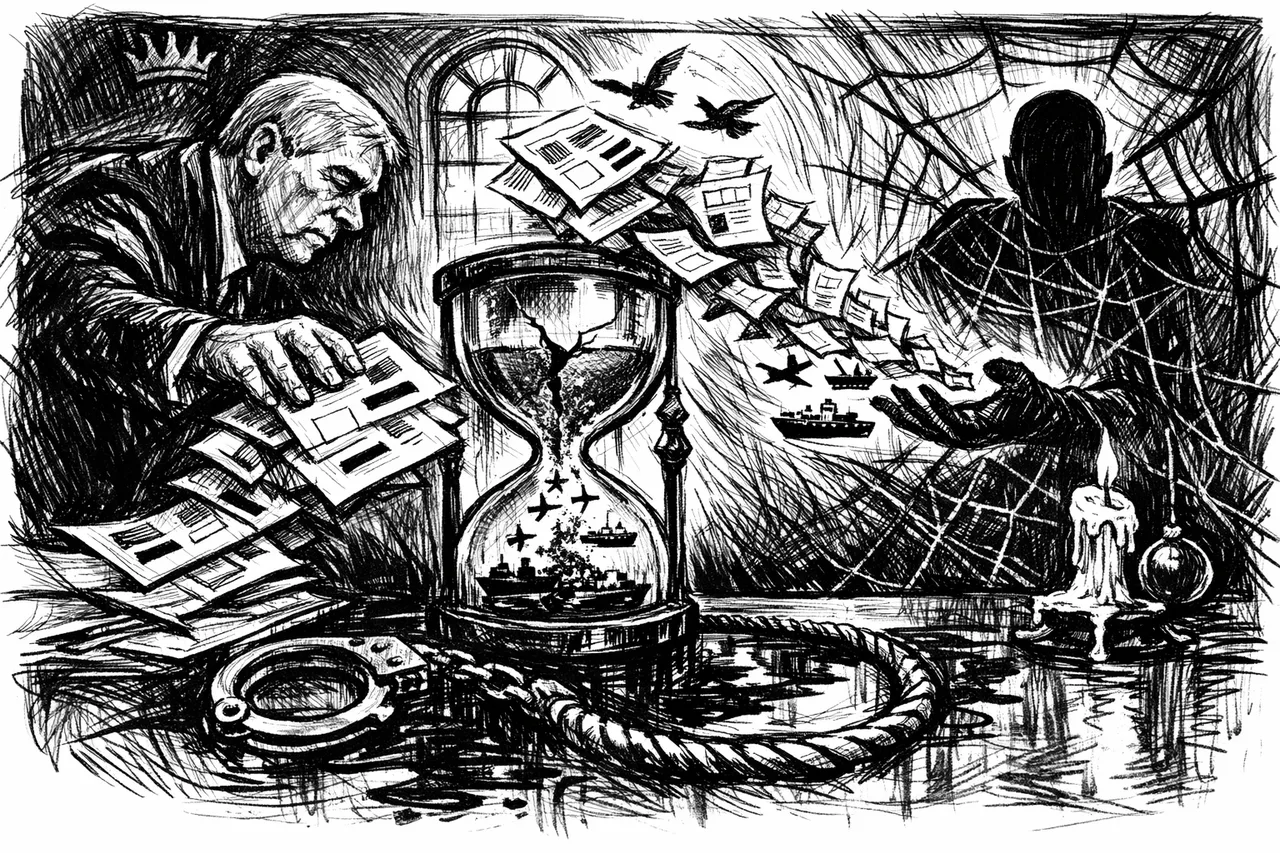
TLDR: Prince Andrew was arrested for misconduct in public office after Epstein files revealed he forwarded confidential UK government reports to Jeffrey Epstein in 2010, including a Christmas Eve brief on Afghan investments and Asian trade itineraries sent within five minutes of receiving them. The charge carries potential life imprisonment, and police continue investigating with the monarchy’s full cooperation after releasing him following twelve hours of questioning.
Thames Valley Police arrested a man in his sixties at the Sandringham estate around 8am on February 19, 2026. The man, widely identified as Andrew Mountbatten-Windsor, was celebrating his 66th birthday when six unmarked cars arrived at Wood Farm, his isolated cottage on the royal estate. The charge: misconduct in public office. The trigger: documents showing he forwarded confidential UK government reports to Jeffrey Epstein in 2010, sometimes within minutes of receiving them.
This isn't about the civil lawsuit Andrew settled for roughly £13 million. It's not about the disastrous BBC interview. This investigation centers on something that sounds almost mundane until you examine the details: a trade envoy treating classified briefings like casual correspondence with a convicted sex offender.
The Timeline That Started the Investigation
The US Justice Department released over three million pages of Epstein files on January 30, 2026. Buried in the correspondence were email chains from late 2010 showing a pattern that raised immediate questions.
October 7, 2010: Andrew emailed Epstein detailed itineraries for upcoming official trips to Singapore, Vietnam, Shenzhen, and Hong Kong. The BBC reports he was accompanied on portions of these visits by Epstein's business associates. This happened two years after Epstein's 2008 conviction for soliciting a minor for prostitution.
November 30, 2010: Andrew's special adviser, Amit Patel, sent him confidential visit reports with file names like VR_HONG_KONG_OCT2010_vFINAL.doc. Five minutes later, Andrew forwarded all four documents to Epstein with no additional message. No context. Just the raw intelligence from official UK trade visits.
December 2010, Christmas Eve: Andrew sent Epstein what he labeled a "confidential brief" on investment opportunities in Helmand Province, Afghanistan—gold, uranium, marble, oil, gas—where British troops were deployed and UK taxpayer money funded reconstruction. His message asked Epstein for "comments, views or ideas as to whom I could also usefully show this to attract some interest."
A former senior trade official told the BBC these documents were "absolutely not for sending outside government and particularly not to somebody who might seek to use them for commercial purposes."
The anti-monarchy group Republic filed a complaint in early February. Thames Valley Police assessed the claims on February 9, launched a formal investigation, and made the arrest ten days later. After roughly twelve hours of questioning at Aylsham police station, Andrew was released under investigation while searches continued at both Wood Farm and his former residence, Royal Lodge in Windsor.
The Job That Created the Access
From 2001 to 2011, Andrew served as the UK's Special Representative for International Trade and Investment. The role leveraged his royal status to open doors for British business worldwide. He wasn't a civil servant, but official guidance made clear that trade envoys have "a duty of confidentiality in relation to information received" during official visits.
The position ended in July 2011 amid growing scrutiny of his Epstein ties, but these emails date from when he was still actively working the role, traveling on taxpayer-funded trips, and receiving sensitive government briefings.
The Charge and the Stakes
Misconduct in public office is a common law offense in England, centuries old but still prosecutable. To secure a conviction, prosecutors must prove a public official willfully abused their position in a way that represents a serious breach of public trust. The maximum sentence is life imprisonment.
An arrest isn't a charge, and a charge isn't a conviction. But the police now have sufficient evidence to hold Andrew for questioning and search his properties, meaning they've crossed the threshold of reasonable suspicion.
The uncomfortable question sitting under all this legalese: Why would a UK trade envoy forward government intelligence on Asian markets and Afghan reconstruction to a convicted criminal? What did Andrew think Epstein could do with information marked "confidential"?
The Family's Calculated Response
King Charles III issued a statement hours after the arrest: "I have learned with the deepest concern the news about Andrew Mountbatten-Windsor and suspicion of misconduct in public office. What now follows is the full, fair and proper process by which this issue is investigated in the appropriate manner and by the appropriate authorities."
The police, he said, have the monarchy's "full and wholehearted support and cooperation."
Note the language: "Andrew Mountbatten-Windsor," not "my brother" or "Prince Andrew." The palace has been tightening the perimeter around Andrew since Virginia Giuffre filed her civil lawsuit. Titles stripped in 2025. Eviction from Royal Lodge to the remote Wood Farm in early 2026. Now this—an arrest on the same estate where the King resides, though Charles was reportedly not informed in advance by police.
The family of Virginia Giuffre, who died in 2025, released their own statement: "At last, today, our broken hearts have been lifted at the news that no one is above the law, not even royalty."
The Broader Pattern This Reveals
Strip away the royal drama and you're left with a case study in how elite access operates. Andrew had confidential briefings on investment opportunities in regions where British military and economic interests overlapped. Someone in his position would have been expected to share that intelligence with appropriate UK government officials, potential British investors through proper channels, or international partners via diplomatic protocols.
Instead, multiple documents went to Epstein—a man whose primary qualifications were a federal conviction, a network of powerful connections, and a private island where he trafficked minors.
This isn't speculation about motive. It's asking what systems allow someone to think forwarding classified documents to a criminal is normal professional conduct. When elite networks become so insular that the boundaries between public duty and private advantage blur completely, confidential government reports become just another tradable asset.
Prime Minister Keir Starmer said it more directly hours before the arrest: "Nobody is above the law." That principle now faces its clearest test in modern British royal history.
What Happens Next
Released under investigation means the case remains active. Police continue gathering evidence, potentially consulting with the Crown Prosecution Service about charges. Timelines for these investigations can stretch months.
For context, misconduct in public office requires prosecutors to prove the conduct was willful—meaning Andrew knew sharing these documents was wrong or acted with reckless indifference. Defense arguments will likely center on whether these materials genuinely qualified as confidential, whether Andrew's role as trade envoy made him a "public officer" in the legal sense, and whether sharing information with potential investors (however questionable Epstein's status) constituted abuse.
The fact that Andrew maintained contact with Epstein after his 2008 conviction complicates any claim that he didn't understand the risks. The fact that he forwarded documents within minutes of receiving them suggests a pattern rather than isolated judgment lapses.
The Files Changed Everything
These emails sat undiscovered for over fifteen years. They only surfaced because the US Justice Department, under pressure to release Epstein-related materials, dumped millions of pages into public view on January 30, 2026. Within three weeks, that disclosure moved from headlines to police assessment to criminal investigation to arrest.
The documents don't just implicate Andrew—they expose how information flows in circles where power and privilege create alternative accountability structures. Where a royal title plus the right connections can mean treating confidential government intelligence as networking currency.
The arrest is real. The emails are documented. The investigation continues. And regardless of what charges may or may not follow, the central revelation stands: a UK trade envoy with privileged access to sensitive information chose to share it with a convicted sex trafficker, apparently seeing him as a useful business contact rather than a security risk.
That's not a royal scandal. That's a question about how unchecked power networks function when nobody's watching the paperwork.